Call To Action
Opposition to Consumers Energy Dam Sale
Overview of the Proposed Sale
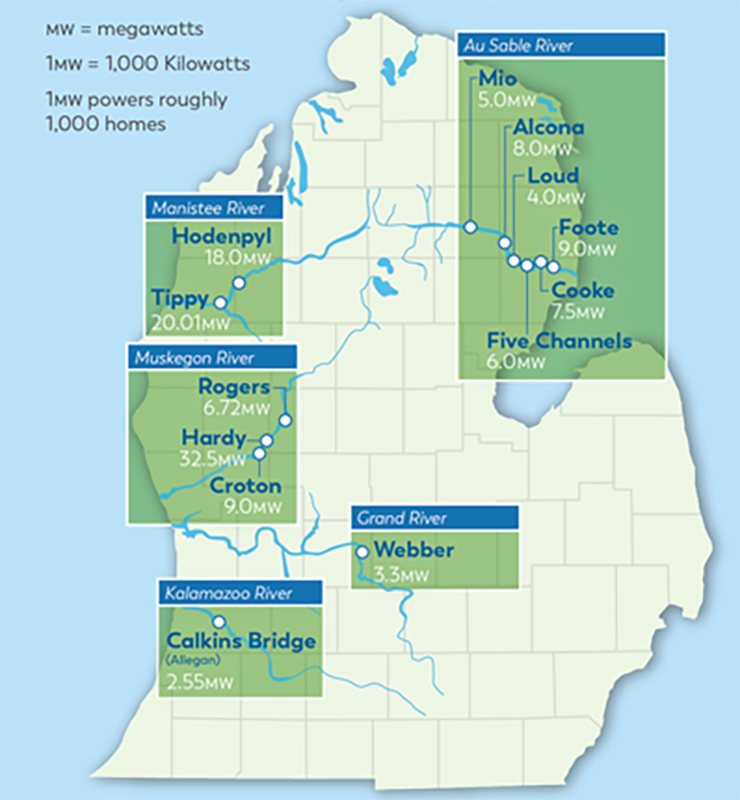
- Consumers Energy plans to sell its 13 aging hydroelectric dams to Confluence Hydro LLC, a Maryland‑based subsidiary of private equity firm Hull Street Energy.
- Each dam would be placed in its own LLC and sold for $1.
- Consumers has offered Confluence a 30‑year power purchase agreement (PPA) at more than twice the current market rate.
- The sale requires approval from both the Michigan Public Service Commission and FERC, with a decision possible by September 2026.
- Consumers’ hydroelectric fleet produces only 50 MW—less than 1% of the utility’s total power generation.
Reasons for the Coalition's Opposition to the Sale
- Long-term Cost Burdens on Ratepayers and Taxpayers
- Consumers Energy plans to pass the high cost and long term PPA directly to its ratepayers
- There is no plan for the final disposition or decommissioning of these dams potentially leaving the state and it taxpayers holding the bag.
- Dam Safety Risks and Lack of Investment Incentives
- Confluence Energy would lack the cost‑recovery tools available to a regulated utility like Consumers, making major capital repairs harder to fund.
- Private equity ownership often prioritizes profit over long‑term safety and regulatory compliance.
- Dam safety is at real risk: this model mirrors the failures at Edenville and Sanford, and the Au Train River project where FERC revoked the license after decades of noncompliance and the owner ultimately declared bankruptcy.
Reference:
- After years of safety lapses, feds yank license for Michigan hydro dam M Live, December 31, 2025.
- Bench trial over dam failures ends; briefs due Feb. 26 Huron Daily Tribune, Tereasa Nims (Staff Writer), January 29, 2026.
- Edenville Dam disaster lawsuit moves to second phase ABC 12 News, Ryan Jeltema, January 29, 2026
- Transfer of Liability, Not Responsibility
- Consumers acknowledges that the primary “value” of the sale is the transfer of existing and future liabilities away from the company.
- Selling the dams allows Consumers to avoid long-term corporate responsibility for aging, high‑risk infrastructure.
- Confluence Hydro operates as a private equity LLC. Private equity firms are created to provide a high rate of return to their investors and are known to Buy, Flip, and Strip!
- After over a 100 years Consumers Energy is walking away from its responsibility to safely operate, maintain or decommission the hydro fleet
- Questionable Track Record of Hull Street Energy
- Hull Street Energy through its subsidiary Central Rivers Power has owned and operated 47 hydroelectric dam operations
- At present the Hull Street Energy energy portfolio holds only one remaining 20MW dam on the Merrimac River showing a track record of dam acquisition and sales since 2017.
- This pattern raises serious concerns about long-term stability, community stewardship, and whether Hull Street is simply flipping assets for profit.
- Water Quality and Relicensing Challenges
- 6 of the 13 dams fail to meet summer water temperature standards.
- These violations degrade downstream aquatic habitat and will complicate future relicensing.
- Passing these challenges to a private equity firm does not solve them—it delays and potentially worsens them.
- Risk of Land Sell-Off
- Hull Street could legally sell off surrounding lands—many of which are high‑value habitat and publicly accessible recreation areas.
- Private equity firms have a fiduciary duty to maximize investor returns, making land liquidation a real possibility.
- What is legal is not always aligned with the public interest.
Consumers Energy Hydroelectric Facilities
Michigan Hydro Relicensing Coalition
The mission is to ensure that conservation, environmental and recreational concerns are adequately addressed by FERC and given the fullest possible consideration throughout the licensing process. The Michigan Hydro Relicensing Coalition is a coalition of five statewide, nonprofit conservation groups with an interest in the protection and enhancement of aquatic resources: Michigan Trout Unlimited, Anglers of the Au Sable, Michigan United Conservation Clubs (MUCC), Great Lakes Council of Fly Fishers International, and Michigan Steelhead and Salmon Fishermen’s Association.